February Information Flow Workshop
Learning How To Control Your Reader
INFORMATION FLOW
Understanding this very complex element of fiction writing is difficult, at best. It seems on the surface to be so easy, but just below that surface is one of the most powerful tools a writer has in their craft toolbox.
For lack of a better way of describing Information Flow, think of this workshop as a way to control your readers.
(You must have taken the Depth Workshop before you can take this workshop.)
Readers build the story you are telling them in their head from reading the little black coding marks you are putting in front of them. If you are coding those little black marks correctly, the reader will see and feel what you want them to see
The reader will get to know your character the way you want them to know the character. The reader will feel the tension or lack of tension you want them to feel.
But if you allow them to make something up that does not fit your story and then try to correct it later, they get confused, annoyed, or just sort of drift out of your story and never come back. It is critical to a good storyteller to control the images and scenes the reader is seeing and feeling.
That's what this workshop is all about on so many levels.
Control.
Long-term bestsellers with millions of readers understand this concept as well as they understand pacing.
Do you want your reader ahead of your character? How do you do that?
You want your readers to pay attention to a detail and not pay attention to other details? How do you do that?
When to put in certain details and when you can leave them out.
And so much, much, much more.
Even if you don't feel you are ready for this kind of advanced workshop yet, it would be worth your time to take this and start to understand and give your creative voice permission to use much of this when it feels it is needed.
Presented in a similar fashion as the Depth Workshop, you must have taken the Depth Workshop to take this class.
Your Instructor
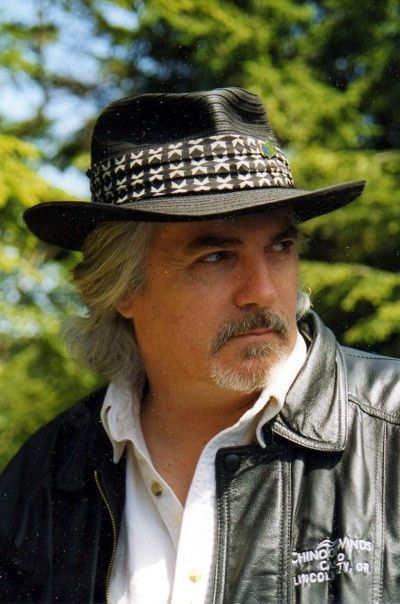
Considered one of the most prolific writers working in modern fiction, New York Times and USA Today bestselling writer, Dean Wesley Smith published over two hundred novels and over seven hundred books, and hundreds and hundreds of short stories. He has over thirty million copies of his books in print.
At the moment he produces novels in four major series, including the time travel Thunder Mountain novels set in the old west, the galaxy-spanning Seeders Universe series, the cold case mystery series, Cold Poker Gang series, and the superhero series staring Poker Boy.
For more information about Dean’s books and ongoing projects, please visit his website at www.deanwesleysmith.com
Course Curriculum
-
StartInformation Flow Week #1, Session #1... What is it? (5:08)
-
StartInformation Flow Week #1, Session #2... The process... (6:00)
-
StartInformation Flow Week #1, Session #3... More on the process... (6:48)
-
StartInformation Flow Week #1, Session #4... Depth and information flow. (6:22)
-
StartInformation Flow Week #1, Session #5... Control (5:19)
-
StartInformation Flow Week #1, Session #6... Where we are headed. (2:53)
-
StartInformation Flow Assignment #1 (3:57)
-
StartInformation Flow Response Assignment #1 (5:33)
-
StartInformation Flow Week #2, Session #1... Control of the reader. (5:50)
-
StartInformation Flow Week #2, Session #2... Fake details means you have lost control. (6:09)
-
StartInformation Flow Week #2, Session #3... When a fake detail is correct to use. (4:58)
-
StartInformation Flow Week #2, Session #4...How to build setting. (6:47)
-
StartInformation Flow Week #2, Session #5... Rule of three (6:37)
-
StartInformation Flow Week #2, Session #6... Cycling. (6:49)
-
StartInformation Flow Assignment #2 (4:55)